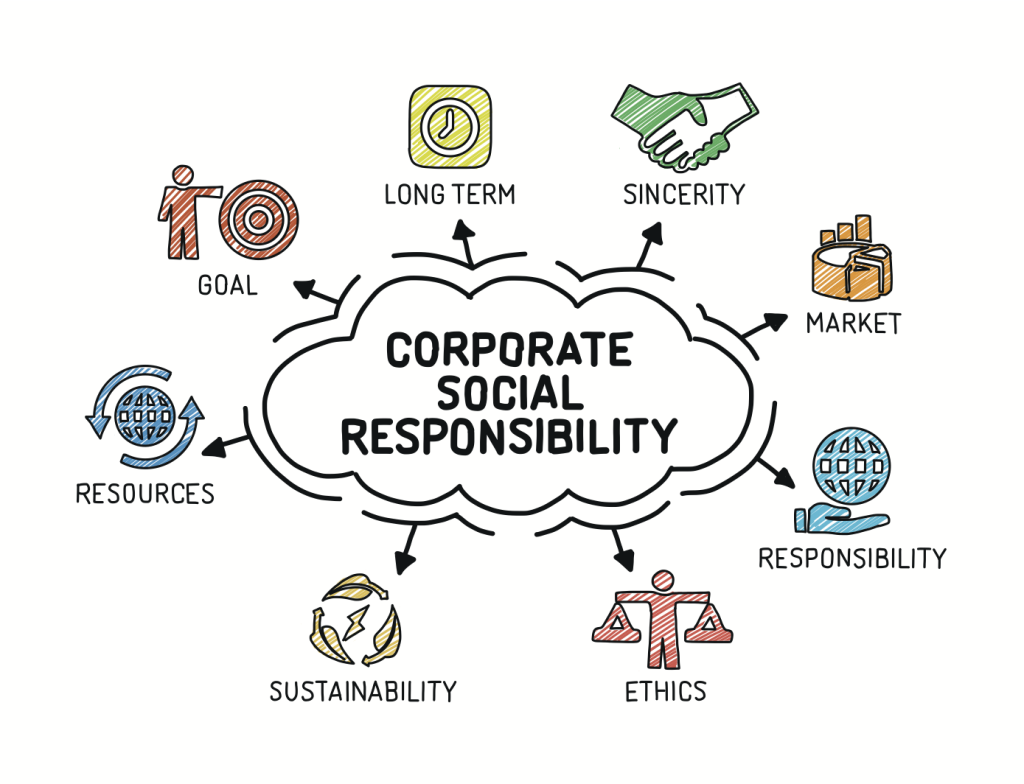
Why Corporate Social Responsibility Matters

In my experience, Corporate Social Responsibility matters because colleges are ideal spaces for shaping social awareness alongside professional development. Students are exposed to business theory, leadership models, and organizational strategies, but they also encounter questions of justice, sustainability, community service, and ethical responsibility. Corporate social responsibility brings those dimensions together in a practical way.
This is especially important because businesses today are expected to do more than generate profit. They are increasingly judged by how they treat employees, support communities, protect the environment, and respond to social challenges. When students engage with CSR during college, they begin to understand that business success and social impact do not have to be separate goals.
There is also a strong connection to institutional Knowledge here. Corporate social responsibility involves understanding ethics, sustainability, stakeholder relations, public trust, and long-term organizational value.
My Perspective on Impacting Society in College
What changed my understanding of Corporate Social Responsibility was realizing that social impact begins long before someone enters a boardroom. At first, CSR may seem like a topic reserved for major companies or experienced executives. But over time, I came to see that college is one of the best places to learn its principles. Students are already participating in communities, joining organizations, leading projects, and making decisions that affect others.
That is what makes corporate social responsibility meaningful to me. It shows that responsibility is not something to postpone until later. It can be practiced through student leadership, campus initiatives, volunteer work, and the values students bring into their studies and future careers.
Core Elements of Corporate Social Responsibility
I think Corporate Social Responsibility becomes easier to understand when its core elements are broken down clearly.
Community engagement
Organizations and students can contribute positively to local needs and social causes.
Environmental responsibility
Sustainable practices help reduce harm and encourage long-term thinking.
Ethical behavior
Responsible decisions should reflect honesty, fairness, and accountability.
Stakeholder awareness
Businesses and institutions must consider how their actions affect different groups.
Philanthropy and service
Giving time, resources, or support can strengthen communities.
Long-term impact
CSR focuses on lasting value rather than short-term image alone.
Common Challenges in Corporate Social Responsibility
I have noticed that Corporate Social Responsibility often comes with recurring challenges in educational settings.
Limited student awareness
Some students may see CSR as abstract or unrelated to their studies.
Superficial engagement
Projects may focus more on appearance than meaningful impact.
Resource constraints
Colleges and student groups may have limited funds or time for initiatives.
Measuring impact
Social benefits are often harder to quantify than financial outcomes.
Balancing priorities
Students may struggle to connect academic pressure with broader responsibility.
Practical Value of Corporate Social Responsibility
I believe Corporate Social Responsibility offers strong value when it is approached as an active part of college life.
It builds social awareness
Students learn to think beyond personal achievement.
It strengthens leadership
CSR encourages service-oriented and ethical leadership habits.
It connects education to real communities
Students see how institutions can contribute to society directly.
It supports sustainability
Responsible action helps promote environmental and social well-being.
It prepares students for modern workplaces
Graduates are better equipped for organizations that value ethical and social responsibility.
Below is a simple overview of how corporate social responsibility can create impact in college:
| Corporate Social Responsibility Element |
Why It Matters |
Example in Practice |
| Community engagement |
Connects students with real social needs |
Organizing outreach programs with local communities |
| Environmental responsibility |
Promotes sustainable habits |
Running campus recycling or energy-saving campaigns |
| Ethical behavior |
Builds trustworthy leadership |
Practicing honesty and fairness in student organizations |
| Stakeholder awareness |
Encourages broader responsibility |
Considering how campus projects affect students, staff, and neighbors |
| Philanthropy and service |
Supports community well-being |
Raising funds or volunteering for social causes |
These elements show that corporate social responsibility is not only a corporate concept. It is also a valuable educational practice that helps students understand how responsible action can create meaningful change.
Why Corporate Social Responsibility Matters Beyond College
I think Corporate Social Responsibility matters because college often shapes the values people carry into professional life. Students who learn to connect ambition with responsibility are more likely to become leaders who care about more than profit or status. They are more likely to think about consequences, relationships, and the kind of impact they leave behind.
That broader significance is what makes this topic so valuable. Corporate social responsibility is not only about projects or public image. It is about building a mindset that sees success and service as connected.
Final Thoughts
For me, Corporate Social Responsibility is one of the most meaningful topics students can explore in college because it teaches them how leadership, business, and social impact can work together. It helps students understand that organizations have responsibilities beyond financial performance, and that individuals can begin practicing those values long before entering the workforce.
That is why it matters so much. Corporate social responsibility is not simply about helping society from a distance. It is about learning to contribute responsibly, starting where you are.