Effective note-taking is a crucial skill for college students, as it enhances comprehension, retention, and engagement with course material. Mastering note-taking involves employing various techniques that cater to different learning styles and course demands. This article outlines essential note-taking strategies that can help students optimize their learning experience and succeed in their academic endeavors.
1. Understand the Purpose of Note-Taking
Before diving into techniques, it’s essential to understand why note-taking is important:
- Enhances Retention: Writing notes helps reinforce information, making it easier to recall later.
- Promotes Active Engagement: Actively listening and writing during lectures keeps students engaged and focused on the material.
- Creates a Study Resource: Well-organized notes serve as a valuable resource for studying and reviewing before exams.
2. Choose the Right Note-Taking Method
Different methods of note-taking cater to various learning styles and preferences. Here are some popular techniques:
– The Cornell Method
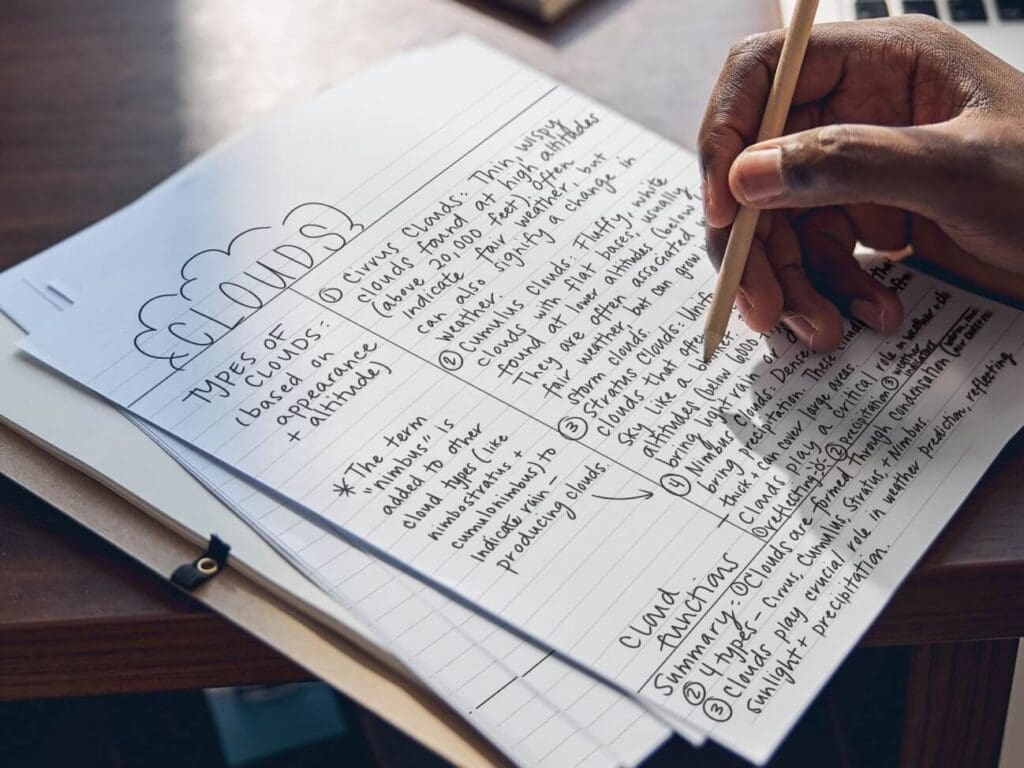
The Cornell Method is a structured technique that organizes the note page into three distinct sections: cues, notes, and a summary.
- Notes Section: Take detailed notes during lectures in the main section.
- Cues Section: After the lecture, write down keywords or questions in the left-hand column that correspond to the notes.
- Summary Section: At the bottom, summarize the key points of the lecture in a few sentences.
This method encourages active engagement and helps with later review.
– The Outline Method
The Outline Method organizes information hierarchically, using bullet points and indentation to show relationships between concepts.
- Main Ideas: Write main topics as headings.
- Subtopics: Use sub-bullets for supporting details and examples.
This structured format helps in visualizing the organization of information and is particularly useful for subjects with clear hierarchies, such as history or biology.
– The Mapping Method
The Mapping Method involves creating a visual representation of information, which is especially effective for visual learners.
- Central Idea: Start with a central idea in the middle of the page.
- Branches: Create branches for major topics, with sub-branches for details.
This technique helps students see connections between concepts and is ideal for brainstorming sessions and complex subjects.
3. Use Technology Wisely
In the digital age, technology can enhance note-taking efficiency. Consider these tools:
- Note-Taking Apps: Applications like Evernote, OneNote, or Notion allow for organized digital notes, easy access, and the ability to integrate multimedia elements.
- Audio Recording: Recording lectures can be beneficial for later review. However, ensure you have permission from the instructor and use recordings as a supplement to written notes.
4. Develop Effective Listening Skills
Mastering note-taking goes hand-in-hand with effective listening. Here are tips to improve your listening skills:
- Active Listening: Focus on the speaker, maintaining eye contact and minimizing distractions. Engage with the material by nodding or responding when appropriate.
- Identify Key Points: Pay attention to verbal cues, such as changes in tone or emphasis, which often indicate important information.
5. Review and Revise Your Notes
Taking notes is just the beginning; reviewing and revising them is essential for retention:
- Regular Review: Set aside time each week to review your notes. This reinforces learning and helps identify areas that need further clarification.
- Summarize and Condense: After reviewing, condense your notes into key points or flashcards. This makes studying more efficient and manageable.
6. Stay Organized
Keeping your notes organized is crucial for easy access and effective studying:
- Use Binders or Digital Folders: Organize notes by subject or course in physical binders or digital folders. This makes it easier to find and review material.
- Date Your Notes: Always date your notes and include the lecture topic. This helps track your progress and provides context during reviews.
7. Experiment and Adapt
Every student learns differently, so it’s essential to experiment with various note-taking techniques to find what works best for you. Adapt your methods based on the course content and your personal learning style.
8. Conclusion
In conclusion, mastering note-taking is a vital skill that can significantly enhance a college student’s academic success. By understanding the purpose of note-taking, choosing the right methods, utilizing technology, developing effective listening skills, reviewing and revising notes, staying organized, and adapting techniques, students can optimize their learning experience. As you refine your note-taking strategies, remember that practice and consistency are key. With dedication and the right approach, you can transform your note-taking into a powerful tool for academic achievement.