
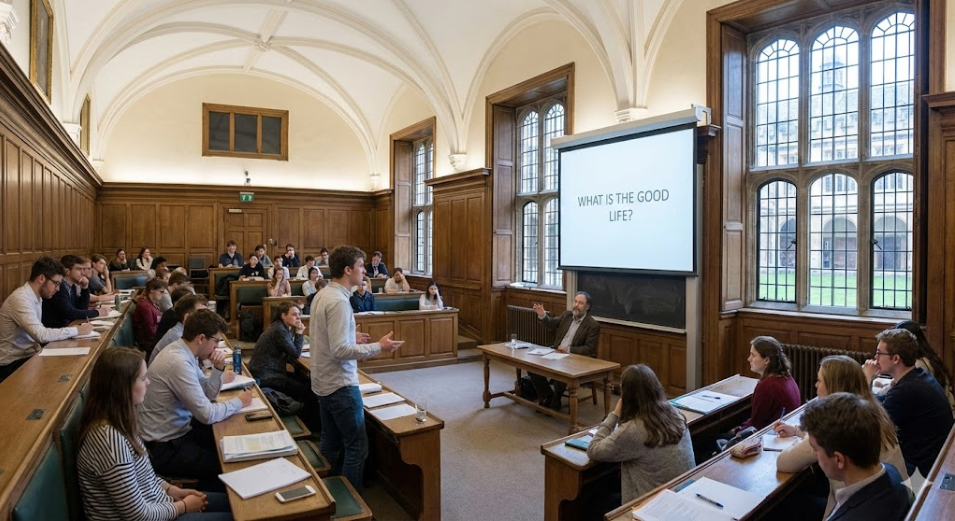
JAKARTA, studyinca.ac.id – Philosophical Inquiry: Questioning Everything at University isn’t just a fancy class name—it’s basically how I survived, learned, and sometimes, embarrassingly messed up through my campus years. From the start, I was told, “Don’t accept anything at face value.” Easy for them to say, right?
Philosophical inquiry is a transformative journey that invites students to question their beliefs, challenge assumptions, and explore the fundamental nature of knowledge, existence, and ethics. At university, engaging in philosophical inquiry not only broadens intellectual horizons but also fosters critical thinking and self-reflection. This article recounts the exhilarating experience of embarking on philosophical inquiry, highlighting its significance in the pursuit of genuine knowledge.
1. The Essence of Philosophical Inquiry

Philosophical inquiry is the process of exploring profound questions about life, reality, and human experience. It encourages individuals to:
a. Question Assumptions
- Challenging Beliefs: Philosophical inquiry prompts students to critically examine their own beliefs and the societal norms they often take for granted. This process of questioning is essential for personal growth and intellectual development.
- Understanding Different Perspectives: Engaging with diverse philosophical traditions allows students to appreciate multiple viewpoints, fostering empathy and open-mindedness.
b. Seek Deeper Understanding
- Exploring Fundamental Questions: Philosophical inquiry encourages students to grapple with fundamental questions such as: What is the nature of reality? What is knowledge? What is the meaning of life? These inquiries lead to a richer understanding of the human experience.
- Interdisciplinary Connections: Philosophy intersects with various fields, including science, politics, and art. This interdisciplinary approach enriches students’ perspectives and enhances their ability to think critically across contexts.
2. The Journey of Philosophical Inquiry at University
Embarking on a journey of philosophical inquiry at university can be both exhilarating and challenging. Here’s a glimpse into what this journey entails:
a. Engaging with Texts
- Reading Classic Philosophers: Students delve into the works of influential philosophers such as Plato, Aristotle, Kant, and Nietzsche. Engaging with these texts requires careful reading and critical analysis, as students seek to understand complex ideas and arguments.
- Contemporary Philosophical Debates: Exploring contemporary issues in philosophy, such as ethics in technology or environmental philosophy, allows students to apply philosophical inquiry to real-world problems.
b. Participating in Discussions
- Classroom Dialogues: University philosophy courses often emphasize discussion and debate. Engaging with peers in thoughtful dialogue challenges students to articulate their ideas clearly and consider alternative viewpoints.
- Philosophical Societies: Many universities have philosophical societies or clubs where students can engage in informal discussions, host guest speakers, and participate in debates, further enriching their philosophical journey.
c. Developing Critical Thinking Skills
- Argument Analysis: Students learn to analyze and construct arguments, honing their ability to reason logically and critically assess the validity of claims. This skill is invaluable not only in philosophy but also in everyday decision-making.
- Reflective Writing: Writing essays and reflections on philosophical topics encourages students to articulate their thoughts coherently and engage deeply with complex ideas.
3. The Impact of Philosophical Inquiry
The journey of philosophical inquiry profoundly impacts students’ lives, shaping their perspectives and influencing their future endeavors:
a. Personal Growth
- Self-Discovery: Engaging in philosophical inquiry fosters self-reflection and introspection. Students often find themselves questioning their values, beliefs, and life choices, leading to greater self-awareness and personal growth.
- Resilience in Uncertainty: Philosophy teaches students to embrace uncertainty and complexity. This resilience is crucial as they navigate the complexities of life beyond university.
b. Preparation for Diverse Careers
- Transferable Skills: The critical thinking, analytical, and communication skills developed through philosophical inquiry are highly valued in various fields, including law, education, business, and public policy.
- Ethical Decision-Making: A background in philosophy equips students with the tools to approach ethical dilemmas thoughtfully, making them more effective leaders and decision-makers in their respective careers.
4. Conclusion
In conclusion, philosophical inquiry is a wild ride that transforms students’ understanding of themselves and the world around them. By questioning everything and engaging deeply with fundamental ideas, students embark on a journey toward real knowledge and self-discovery.
As they navigate the complexities of philosophical thought, they develop critical skills that will serve them throughout their lives. Embracing the spirit of philosophical inquiry not only enriches their academic experience but also empowers them to become thoughtful, reflective individuals capable of making meaningful contributions to society. The journey may be challenging, but it is undoubtedly one of the most rewarding paths one can take in the pursuit of knowledge and understanding.
Explore our “Knowledge” category for more insightful content!
Don't forget to check out our previous article: Student Accommodation: Finding the Perfect Home Away from Home
