

Jakarta, studyinca.ac.id – Understanding Credit Transfer is important for university students who plan to move between institutions, change programs, or continue studies in a new academic setting. Academic mobility can happen for many reasons, including relocation, better program fit, financial considerations, or personal circumstances. In these situations, the ability to transfer previously completed credits can save time, reduce repeated coursework, and help students continue their education more efficiently.
However, credit transfer is not always automatic. Different institutions may have different rules regarding course equivalency, grade requirements, documentation, and transfer limits. Students who understand the process early are usually in a stronger position to make informed decisions and avoid academic delays.
Why credit transfer matters
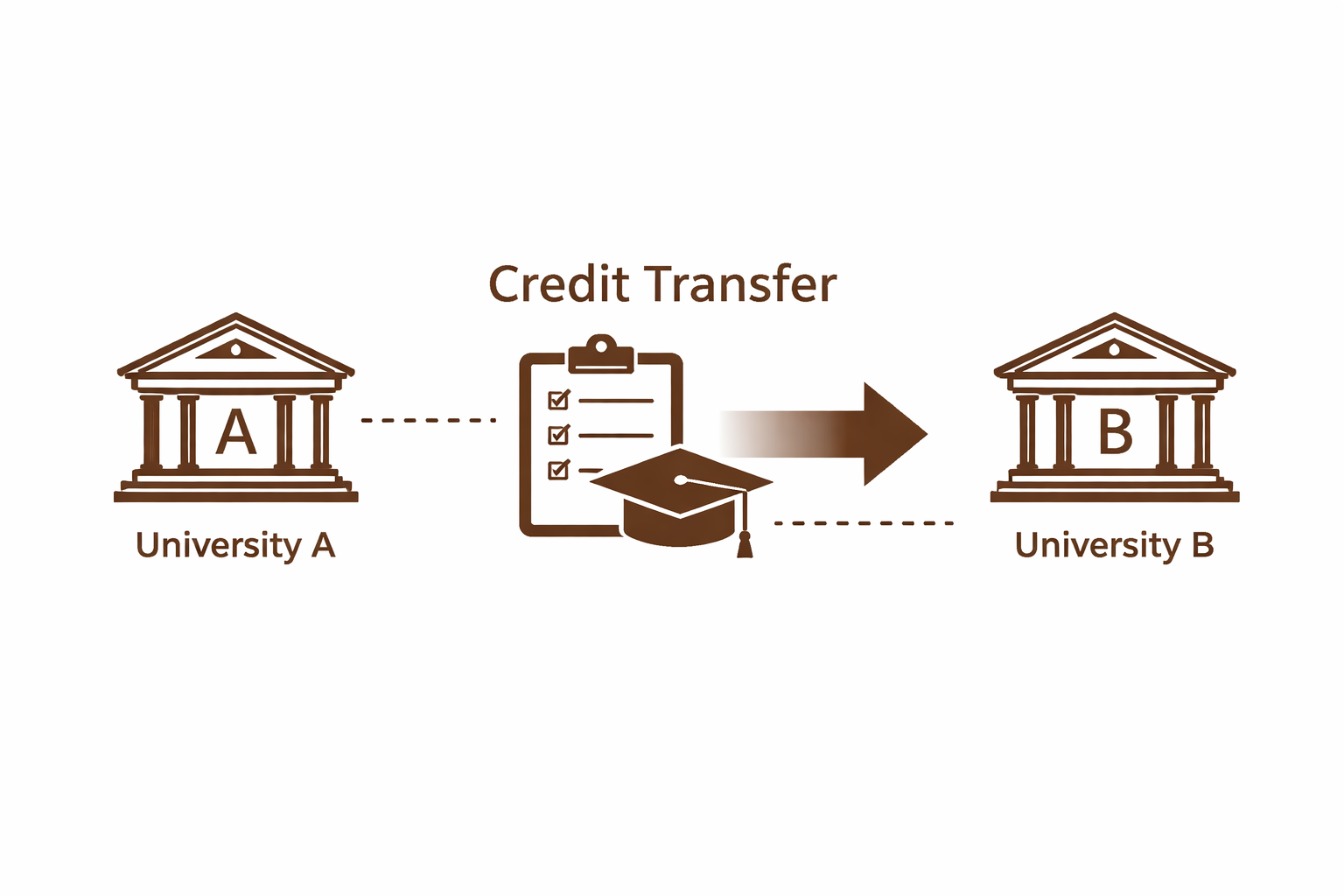
Credit Transfer matters because it can protect the time and effort students have already invested in their studies. When credits are recognized by a new institution, students may be able to continue progressing without repeating subjects they have already completed successfully.
This can help students:
- Save time toward graduation
- Reduce academic repetition
- Lower overall education costs
- Maintain progress after changing institutions
- Make transitions more manageable
For many students, that makes transfer policy an important academic planning issue.
Common reasons students transfer credits
Students pursue Credit Transfer for a range of academic and practical reasons. The process is often linked to changing circumstances rather than a single fixed goal.
Common reasons include:
- Moving to a different city or country
- Changing majors or degree paths
- Transferring from one university to another
- Continuing from diploma to degree study
- Seeking a better academic or financial fit
Each situation may involve different transfer rules, so students should review their options carefully.
How the transfer process usually works
The Credit Transfer process often involves submitting academic records and course information for evaluation by the receiving institution. Universities typically review whether previous coursework matches the new program’s academic standards and learning outcomes.
Required documents may include:
- Official transcripts
- Course descriptions or syllabi
- Credit or hour details
- Grade records
- Transfer application forms
The receiving institution usually decides which credits are accepted and how they apply to the new program.
Factors that affect transfer approval
Several factors can influence whether Credit Transfer is approved. Even if a student completed a course successfully, the new institution may not automatically count it if it does not meet program requirements.
Important factors may include:
- Similarity of course content
- Accreditation or recognition of the original institution
- Minimum grade requirements
- Age of completed coursework
- Maximum number of transferable credits
- Relevance to the new degree program
This is why students should never assume that matching course titles automatically guarantee transfer.
Planning ahead for smoother transfers
Students can improve their Credit Transfer experience by preparing early and keeping academic records organized. A proactive approach often reduces confusion and helps students move through the process more efficiently.
Helpful steps include:
- Check transfer policies before applying
- Keep course outlines and academic records
- Ask how credits apply to degree requirements
- Compare program structures carefully
- Communicate with academic advisors early
The more clearly students understand the rules, the less likely they are to face unpleasant surprises after enrollment.
Final thoughts
Credit Transfer helps university students continue their education more efficiently by allowing recognized academic work to move between institutions. Because policies vary, students need to approach the process with careful planning, accurate documentation, and a clear understanding of institutional requirements.
Changing institutions can be a major decision. A well-managed credit transfer process helps make that decision more practical, efficient, and academically sound.
Explore our “”Knowledge“” category for more insightful content!
Don't forget to check out our previous article: Study Groups: How University Students Can Improve Learning Through Collaboration
